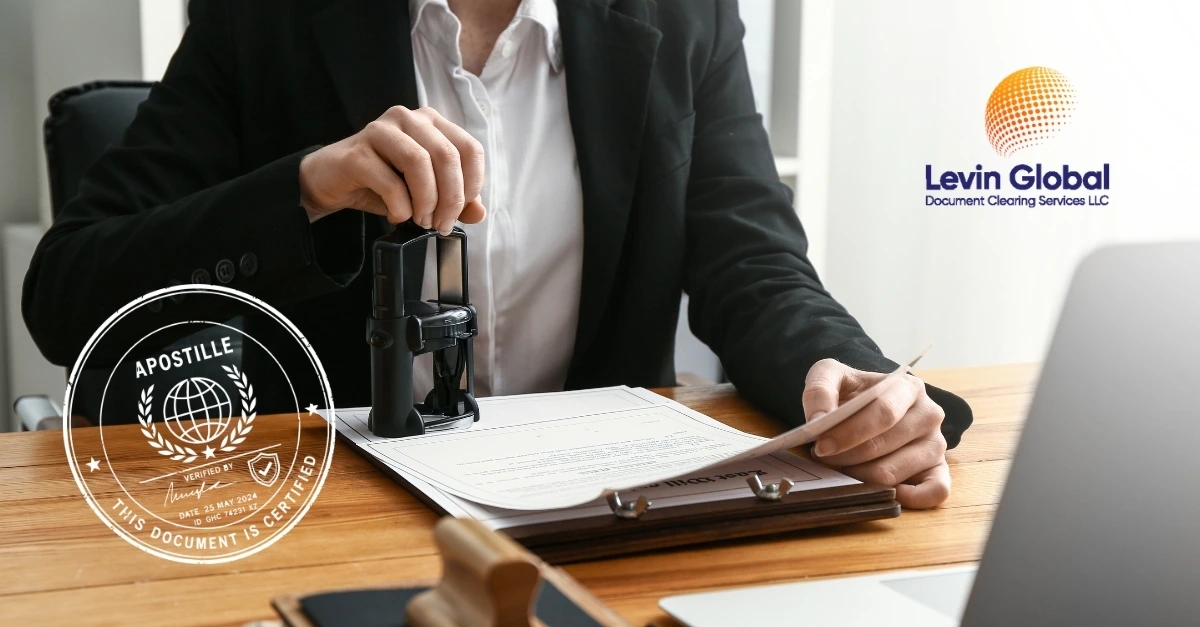
Planning to study, work, get married or move abroad? There is a good chance you will be asked to prove that your documents are genuine. This is where an apostille can become important.
An apostille is an official certificate used to authenticate certain public documents for use in another country. It can save you from going through the traditional legalisation process when both the country where the document was issued and the country where it will be used are members of the 1961 Hague Apostille Convention.
What Is an Apostille?
An apostille confirms the authenticity of the signature, seal or stamp on a public document. It does not confirm that the information written in the document is true or that the qualification itself is valid.
The Hague Apostille Convention was created to simplify the process of using public documents internationally. Instead of multiple levels of legalisation, a single apostille issued by the competent authority in the country where the document originated can generally be used in another Convention country.
When Do You Need an Apostille?
You may need an apostille when an official document issued in one country has to be submitted to an authority in another country that accepts apostilles.
Common situations include:
- Studying abroad: Degree, diploma and other educational documents may need authentication.
- Working overseas: Employers or authorities may ask for verified educational or personal documents.
- Moving to another country: Documents may be required for residency or citizenship applications.
- Marriage abroad: Birth, marriage or other personal documents may need authentication.
- Legal and business matters: Powers of attorney, affidavits and certain commercial documents may require authentication for overseas use.
The Hague Convention specifically covers public documents, and its applications include international marriages, relocation, study, residency, citizenship and business transactions.
Do Indian Documents Need an Apostille?
India has been a member of the Hague Apostille Convention since 2005. The Ministry of External Affairs (MEA) provides apostille services for Indian documents intended for use in other Convention countries. These can include educational documents such as degrees and diplomas, as well as personal documents such as birth and marriage certificates, affidavits and powers of attorney.
However, if the destination country is not a member of the Hague Convention, an apostille is generally not the applicable process. India uses normal attestation for countries where apostilles are not accepted.
Apostille or Attestation: Which One Do You Need?
The answer mainly depends on where your document will be used.
If the destination country is a Hague Apostille Convention member, an apostille may be the appropriate authentication route. For a non-member country, you may need document attestation or legalisation instead.
It is always worth checking the current requirements of the authority receiving your document before starting the process.
Conclusion
An apostille can make international document authentication much simpler, but it is not required for every country or every document. Knowing the destination country’s requirements first can help you choose the right process and avoid unnecessary delays.
Need help with apostille or document attestation for overseas use? Contact Levin Global Services for professional assistance.